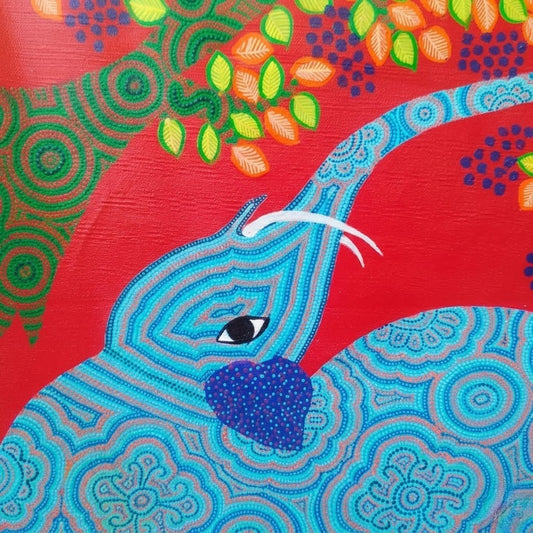
What Is Pithora Art?
Pithora art is a painting tradition associated especially with the Rathwa community of eastern Gujarat. It is most strongly connected with Chhota Udepur and neighbouring areas, where ritual wall paintings have traditionally formed part of household ceremonies, community belief and the worship of Baba Pithora, also known as Pithora Dev.
Traditional Pithora painting is created on a prepared interior wall. Its visual world may include horses, deities, ancestors, animals, trees, farming activity, village scenes, the sun, the moon and other celestial or natural elements. Rather than following realistic perspective, the figures are generally arranged symbolically within a layered narrative composition.
Over time, artists connected with Rathwa visual traditions began working on canvas, paper and other portable surfaces. These developments allowed the artistic vocabulary to reach exhibitions, collectors and contemporary interiors beyond its original household setting.
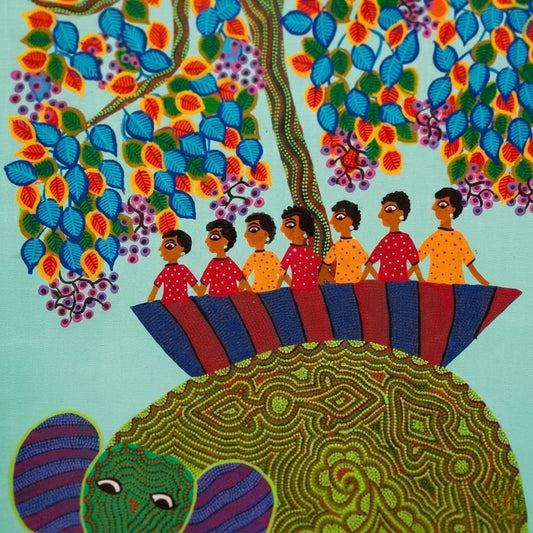
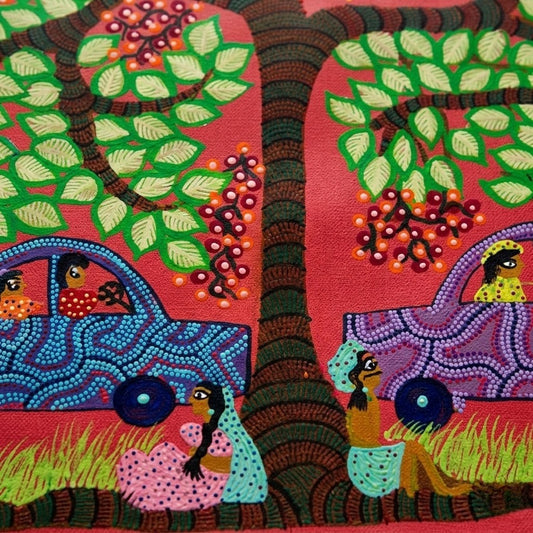
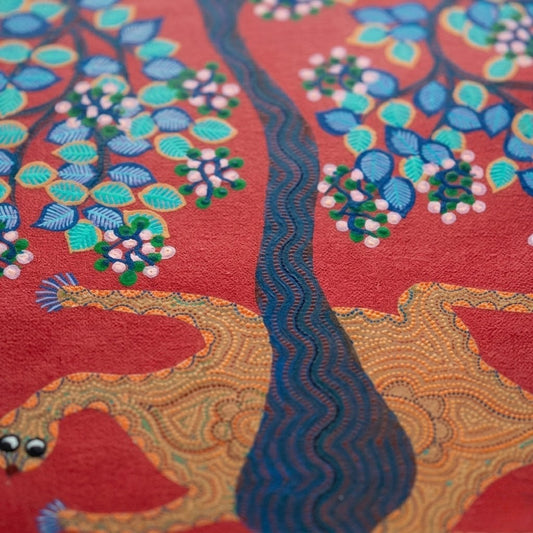
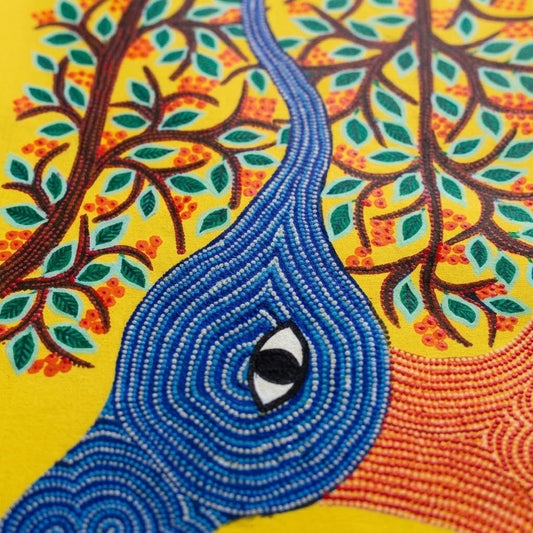
A contemporary Pithora art painting may carry selected motifs, colours, patterns or storytelling methods without reproducing the complete structure of a ritual mural. Some canvas works concentrate on one animal, tree, forest scene or decorative arrangement. They remain connected with regional artistic knowledge while serving a different purpose from a mural created for a specific ceremony.
The Meaning and Ritual Origins of Pithora Painting
In its traditional setting, a Pithora mural may be commissioned in connection with a household vow, often referred to as a mannat. A family may make such a vow during a period of difficulty or while seeking well-being, health, protection, agricultural prosperity or support during an important family occasion. When the vow is to be fulfilled, the household prepares for the painting and its associated ceremony.
The mural honours Baba Pithora or Pithora Dev within the community’s wider system of belief. Its figures do not function merely as decoration; they participate in a visual narrative understood through oral tradition, ritual knowledge and collective memory.
The Badva, a community ritual specialist, traditionally guides or interprets important ceremonial aspects. The painter is commonly known as the Lakhara or Lakhindra and works with knowledge of established subjects, arrangements and painting practices. Roles and procedures may vary by community and local context.
A traditional mural is therefore connected with a particular household, occasion and ritual environment. It should not be treated as identical to an ordinary decorative wall painting. Contemporary Pithora paintings made for sale or display may draw from the same visual language, but they are not necessarily connected with a vow, supervised by a Badva or produced through the complete household ritual process.
Visual Language and Common Motifs
Horses hold a central place in many traditional ritual Pithora compositions. Depending on the narrative and ritual context, they may be associated with deities, ancestors or other significant presences. Their meaning is shaped by community interpretation and the larger composition rather than by a single universal explanation.
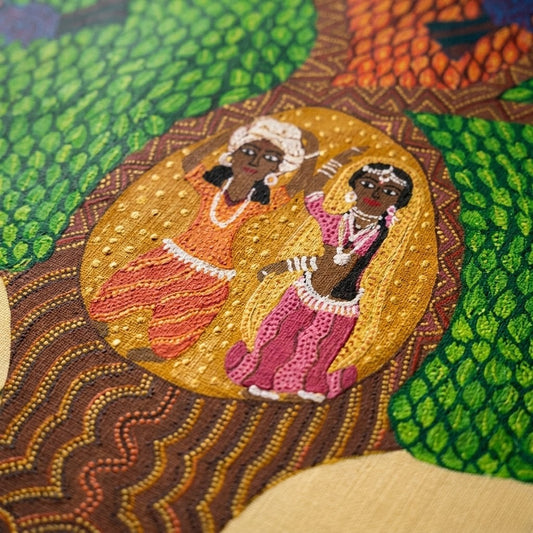
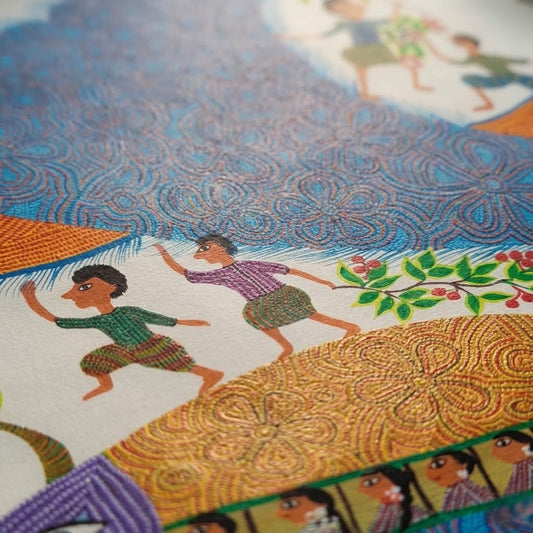
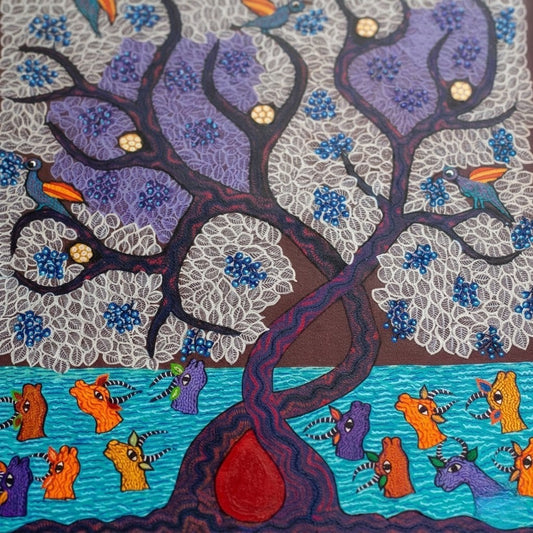
The wider visual language may include cattle, elephants, deer, antelope, tigers, leopards, birds and other creatures connected with the landscape and everyday experience. Trees, forests, fields and agricultural activity can establish a sense of place, while scenes of village life may depict movement, work, gatherings or social relationships.
Celestial elements such as the sun and moon may appear alongside terrestrial subjects. Repeated borders, patterned backgrounds and sequences of figures can produce rhythm across the surface. Many compositions are dense and narrative, allowing several events or forms of life to occupy the same visual field.
Figures are often flat, direct and symbolic rather than modelled through realistic light, shadow or linear perspective. Bright colours and clearly defined shapes help individual elements remain visible within crowded arrangements.
Contemporary artists may also introduce present-day objects, changing environments or personally observed subjects. This adaptability is part of the continuing practice of visual storytelling.
Not every Pithora painting contains every traditional motif. Individual canvas artworks may focus closely on a tiger, elephant, bird, tree, village scene or forest canopy. Others may use patterned arrangements inspired by the wider tradition without attempting to recreate a complete ritual narrative.
What You Will Find in This Pithora Art Collection
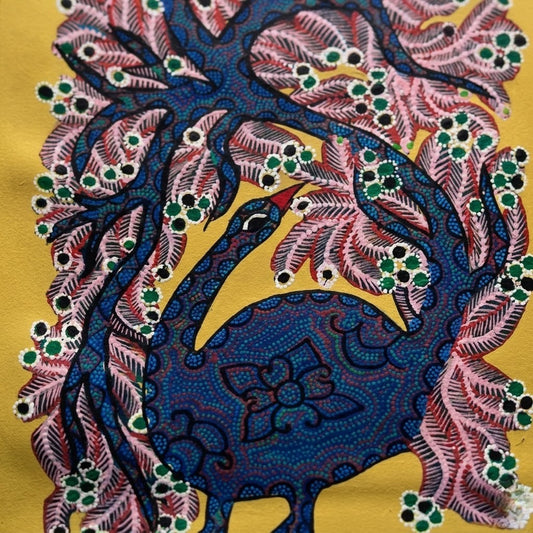
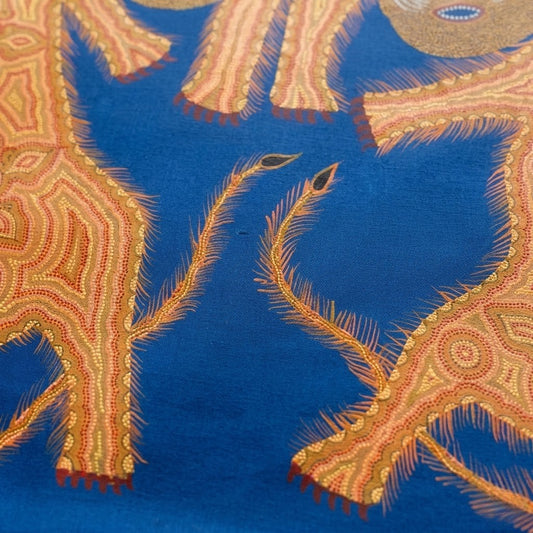
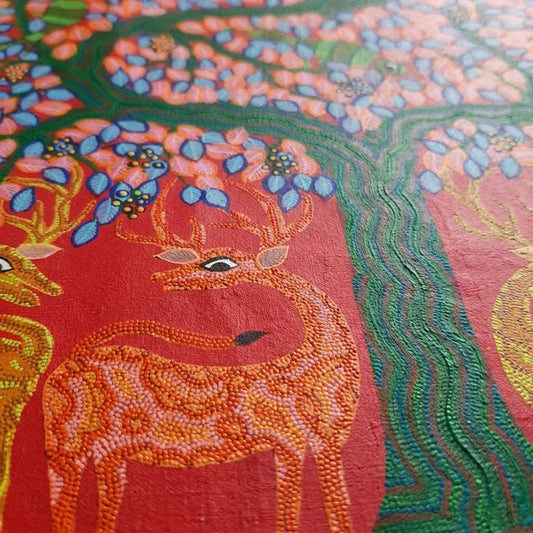
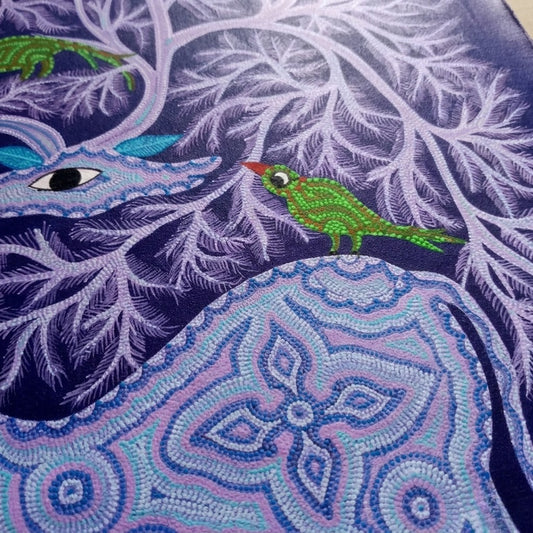
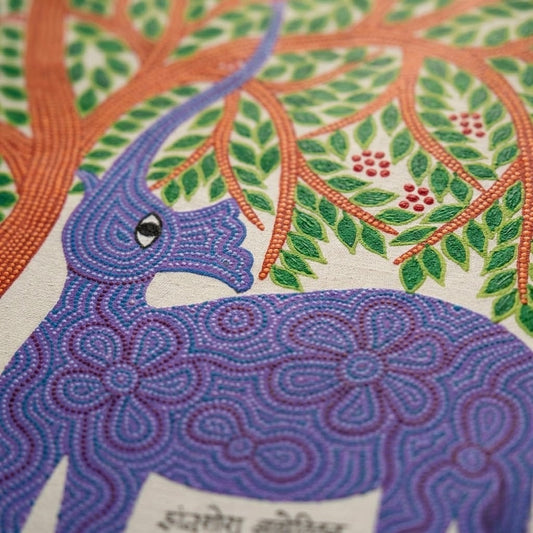
The works displayed in this collection are hand-painted canvas artworks connected with Gujarat’s Rathwa visual traditions. Depending on current availability, the selection may include elephants, tigers, leopards, deer, antelope, peacocks and other birds, as well as trees, forest canopies, village activity and patterned backgrounds.
Some compositions place a single animal beneath a tree or within a carefully organised natural setting. Others combine animals, people, vegetation and repeated patterns in denser narrative arrangements. This range allows buyers to choose between focused decorative works and visually layered paintings that reward closer viewing.
Contemporary artisans may interpret familiar regional subjects in different ways. One artist may emphasise the movement of animals, another may develop intricate foliage, and another may build rhythm through repeated marks or figures. Small differences in line, spacing, colour application and detail are natural features of handmade work rather than faults in mechanical reproduction.
These paintings should not automatically be understood as exact copies of ritual wall murals. They are portable canvas artworks that may use, adapt or reinterpret elements associated with Pithora painting and Rathwa art.
Before selecting a work, review the individual product page for its dimensions, medium, surface, orientation and current availability. Framing information should also be checked separately, as it may differ between listings. Product-specific photographs can help you assess the painting’s scale, colour balance, level of detail and suitability for your intended space.
How Pithora Art Is Created
Traditional mural preparation
Traditional mural preparation begins with the interior wall. Where customary and locally applicable, the surface may be prepared using layers that include mud and cow dung. A white ground is then applied to create a clear field for the composition. Exact materials and methods can vary between places, households and periods.
The mural is created within a ritual setting rather than as an isolated studio exercise. Household preparation, community participation and the guidance of the Badva may form part of the process. The Lakhara or Lakhindra paints the figures and narrative elements according to knowledge developed through practice and community tradition.
Painting may be accompanied by prayer, storytelling, singing or other ceremonial activity. These elements help explain why the traditional mural cannot be understood solely through its visual appearance.
Contemporary canvas process
A contemporary Pithora painting on canvas begins with a portable canvas or another prepared surface. The artisan plans or draws the composition and applies colour by hand. Depending on the artist and the product, materials may include contemporary paints or other disclosed media.
Artists may work with established regional subjects while making individual decisions about scale, pattern, colour, density and arrangement. After painting, the surface is allowed to dry and is prepared for handling or display.
Contemporary canvas works should not automatically be assumed to use natural pigments, milk, alcohol or other traditional binders. Materials differ between artists and artworks. Buyers should refer to the individual product listing for the medium, surface and other product-specific information provided.
Pithora Art, Rathwa Art and Related Tribal Painting Traditions
Pithora is associated especially with the Rathwa community of eastern Gujarat, particularly the cultural region around Chhota Udepur. Related ritual and painting practices are also found among Bhil and Bhilala communities in parts of Gujarat and neighbouring Madhya Pradesh.
The term Rathwa art may cover a wider field of visual work created by Rathwa artists. This can include ritual Pithora compositions as well as contemporary paintings based on animals, forests, village life, community experience, repeated patterns and regional storytelling methods.
Not every painting created by a Rathwa artisan is automatically a complete Pithora ritual mural. A canvas showing a tiger beneath a tree, for example, may be a contemporary artwork rooted in Rathwa visual traditions rather than a reduced version of a specific ceremonial composition.
This distinction does not make contemporary work less meaningful. It helps buyers understand its actual context and appreciate the artist’s choices without assigning an unsupported ritual history to the object.
Accurate classification is also important when discussing related Gujarat tribal art traditions. Community attribution, regional origin, surface, materials and intended purpose should be described clearly. Transparent language respects both ritual Pithora painting and the contemporary practices that have developed around its visual vocabulary.
How to Choose a Pithora Painting for Your Space
Consider the Size
Check the stated dimensions and compare them with the wall area available. Marking the measurements temporarily with paper or removable tape can help you understand the actual scale. Leave sufficient space around the artwork so that detailed forms and patterns do not feel compressed by furniture or nearby décor.
Choose the Right Orientation
Horizontal paintings can work above a sofa, console, sideboard or dining table. Vertical works may suit narrow walls, entryways or spaces beside furniture. Square compositions can provide a balanced focal point in reading corners, studies or grouped displays. Always compare the artwork’s orientation with the proportions of the wall.
Look at Visual Density
A focused composition featuring one animal, bird or tree can be easier to place in a smaller room. A dense narrative arrangement containing multiple figures, patterns and activities may require a larger viewing area and more visual breathing room.
Consider the Colour Palette
Bright and multicoloured paintings can create a strong contrast in neutral interiors. Earthier or warmer palettes may sit comfortably with wood, natural fibres and handcrafted furnishings. Consider the existing wall colour, upholstery and lighting rather than selecting a painting in isolation.
Check the Medium and Surface
Review whether the work is painted on canvas or another surface. Check which paints, pigments or materials have been disclosed. Material information can influence handling, framing and long-term care.
Check Framing and Display Information
Do not assume that a painting is supplied framed or ready to hang. Read the individual listing carefully for current framing, mounting and display information.
Review Availability and Product Details
Before buying a Pithora painting online, confirm its current availability and review the latest product photographs, dimensions, medium, orientation, dispatch information and other listing details. Product pages should be treated as the source for information specific to each artwork.
Pithora Art in Contemporary Interiors
Pithora wall art can introduce pattern, storytelling and a strong regional character into contemporary interiors. Larger compositions may serve as focal points in living rooms, dining areas, entryways or offices. Detailed works can also suit studies and reading corners, where they can be viewed at a closer distance.
In hospitality spaces, a substantial painting may help define a reception area, dining room or quiet lounge. Pithora paintings can also work within heritage-focused or eclectic interiors that combine Indian textiles, wood, ceramics and other handmade objects.
A highly detailed painting usually benefits from visual breathing room. Avoid surrounding it with too many small decorative pieces, strong wallpaper patterns or competing artwork. The viewer should be able to approach the painting and notice its animals, foliage, figures and repeated marks.
When placing a work above furniture, consider the relationship between the painting’s width and the object below it. A very small work may feel disconnected above a wide sofa, while an oversized painting may dominate a narrow console. Viewing distance matters as well: dense narrative paintings often reveal more when there is space to step back and move closer.
Smaller artworks may suit grouped arrangements, provided their colours and spacing are considered carefully. Always confirm the dimensions before purchase rather than estimating scale from photographs alone.
Artisans, Community Knowledge and Responsible Representation of Pithora Art
Hands of Craft works with multiple artisans and artisan families associated with the craft traditions of Gujarat. Within Rathwa visual traditions, artistic knowledge may be developed through family practice, community observation, participation and sustained work with familiar subjects and painting methods.
Individual makers do not necessarily interpret the same animal, tree or narrative in an identical way. Differences in line, proportion, colour, spacing and detail reflect handmade practice and artistic decision-making. These variations should be acknowledged without reducing the work to a generic collective style.
At the same time, describing an artwork as community-based should not erase the contribution of the person who painted it. Responsible representation includes sharing the region, community association, materials, surface and process as clearly as the available information allows.
Buyers should be cautious of machine-made prints or mass-produced objects marketed only with broad labels such as “tribal-style art.” Such descriptions may borrow the appearance of a regional tradition without explaining who created the work or how it was made.
Purchasing a hand-painted work can help maintain demand for skilled craftsmanship. However, claims about artisan income, direct sourcing, fair-trade status or economic impact should be made only when they can be supported. Clear product information and respectful cultural attribution provide a more reliable basis for trust.
How to Identify a Credibly Described Pithora Artwork
A credibly presented Pithora artwork should have a clear connection with its region and artistic community. Look for information linking the work with Chhota Udepur, eastern Gujarat, the Rathwa community or an identified collective of artisans associated with the tradition.
The description should explain whether the object is a ritual mural, a traditional-style work, a contemporary canvas painting or a composition influenced by Pithora and Rathwa visual language. A portable commercial artwork should not be presented as a household ritual mural unless its specific history supports that claim.
Useful product information includes the medium, surface, dimensions, orientation, product-specific photographs, framing status, current availability and care guidance. Provenance or additional documentation may also be mentioned where it is genuinely available, but it should not be invented or assumed.
Hand-painted works commonly show small variations in line and colour. These should be visible in accurate photographs rather than concealed through heavily standardised imagery.
Pithora is a GI-recognised handicraft tradition associated with the Rathwa community and Chhota Udepur. The works in this collection are presented as originating from that regional tradition. However, recognition of the wider tradition does not automatically function as individual certification for every commercial painting.
A contemporary canvas artwork can be a legitimate expression of Pithora or Rathwa artistic practice. Honest descriptions of its origin, process and purpose are more useful than exaggerated claims of ritual use or guaranteed authenticity.
Caring for a Hand-Painted Pithora Canvas
Keep a hand-painted Pithora canvas away from prolonged direct sunlight, which may gradually affect its colours. Avoid placing it in areas exposed to excessive moisture, humidity, steam or frequent temperature changes.
Remove surface dust gently with a clean, soft and completely dry cloth. Do not apply water, household sprays, solvents or chemical cleaners to the painted surface. Avoid touching the painted area unnecessarily, as oils and moisture from the hands may leave marks.
Handle the artwork carefully whenever it is moved. Support the canvas properly and avoid folding, scraping or placing pressure against the painted side.
Follow any product-specific framing, stretching or display guidance included in the listing. Materials and finishes can differ between artworks, so general care advice may not cover every situation. For delicate, damaged or high-value works, consult a qualified professional conservator rather than attempting repairs or intensive cleaning at home.
Frequently Asked Questions About Pithora Art
1. What is Pithora art?
Pithora art is a painting tradition associated especially with the Rathwa community of eastern Gujarat. Traditional murals are created on prepared household walls in connection with Baba Pithora and community ritual practices. Contemporary artists also create hand-painted canvas works that use or reinterpret Pithora’s animals, patterns, colours and storytelling language for portable display.
2. Pithora painting belongs to which state?
Pithora painting is primarily associated with Gujarat, particularly Chhota Udepur and nearby areas in the state’s eastern region. Related traditions are also practised among communities in neighbouring parts of Madhya Pradesh. The GI-recognised handicraft tradition is specifically connected with the Rathwa community of Chhota Udepur, Gujarat.
3. Which community is associated with Pithora painting?
Pithora painting is most strongly associated with the Rathwa community. Related practices are also found among Bhil and Bhilala communities. Community roles, subjects and procedures may differ between regions, so careful attribution is important when describing either a traditional mural or a contemporary regional artwork.
4. What is the meaning of horses in traditional Pithora art?
Horses are important figures in many traditional Pithora compositions and may represent deities, ancestors or other significant presences within the ritual narrative. Their meaning depends on their identity, position and relationship with the complete mural. They should not be treated simply as decorative symbols with one fixed interpretation.
5. Are all Pithora paintings made as part of a ritual?
No. Traditional household murals may be created in connection with vows and ceremonies, but many present-day Pithora paintings are portable canvas artworks made for display, exhibitions and collecting. These works may remain connected with Rathwa visual traditions without being produced through the complete ritual process.
6. What is the difference between a traditional Pithora mural and a canvas painting?
A traditional mural is painted on a prepared interior wall for a particular household and ritual context. A contemporary canvas painting is portable and generally created for display or collection. It may adapt regional motifs and compositional methods without reproducing the full mural or its associated ceremony.
7. Are the artworks in this collection hand painted?
Yes. This collection presents hand-painted works created through artisan practice and connected with Gujarat’s Rathwa visual traditions. Because materials, sizes, surfaces and finishing methods may differ between artworks, customers should review each individual listing for the medium, dimensions, framing status and other product-specific information.
8. Can Pithora paintings be used in modern interiors?
Yes. Contemporary Pithora canvas paintings can work in living rooms, dining areas, studies, entryways, offices and hospitality interiors. Buyers should select the size, orientation, colour palette and visual density according to the available wall space rather than assuming that every painting will suit every setting.
9. How do I choose the right Pithora painting?
Begin with the wall dimensions and preferred orientation. Then compare focused single-subject works with denser narrative compositions. Consider the room’s colours, furniture width and viewing distance. Before purchase, confirm the artwork’s dimensions, surface, medium, availability and framing information on its individual product page.
10. How should I care for a Pithora canvas painting?
Protect the painting from prolonged direct sunlight, excessive humidity and moisture. Dust it gently with a clean, soft and dry cloth, and never apply water or chemical cleaners. Avoid touching the painted surface and follow any framing or display instructions provided with the artwork.
Explore Hand-Painted Pithora Art
Browse the Pithora art collection above to compare hand-painted compositions shaped by Gujarat’s Rathwa visual traditions. The selection may range from focused studies of animals, birds and trees to layered arrangements of forests, patterns and village activity. Because every work is painted by hand, small variations in line, colour and detail form part of its individual character. Before choosing a painting for your home, office or collection, review the dimensions, orientation, medium, availability and framing information provided on the relevant product page. A careful comparison will help you select a contemporary canvas artwork that suits your space while remaining thoughtfully connected with the regional artistic knowledge from which it emerges.